
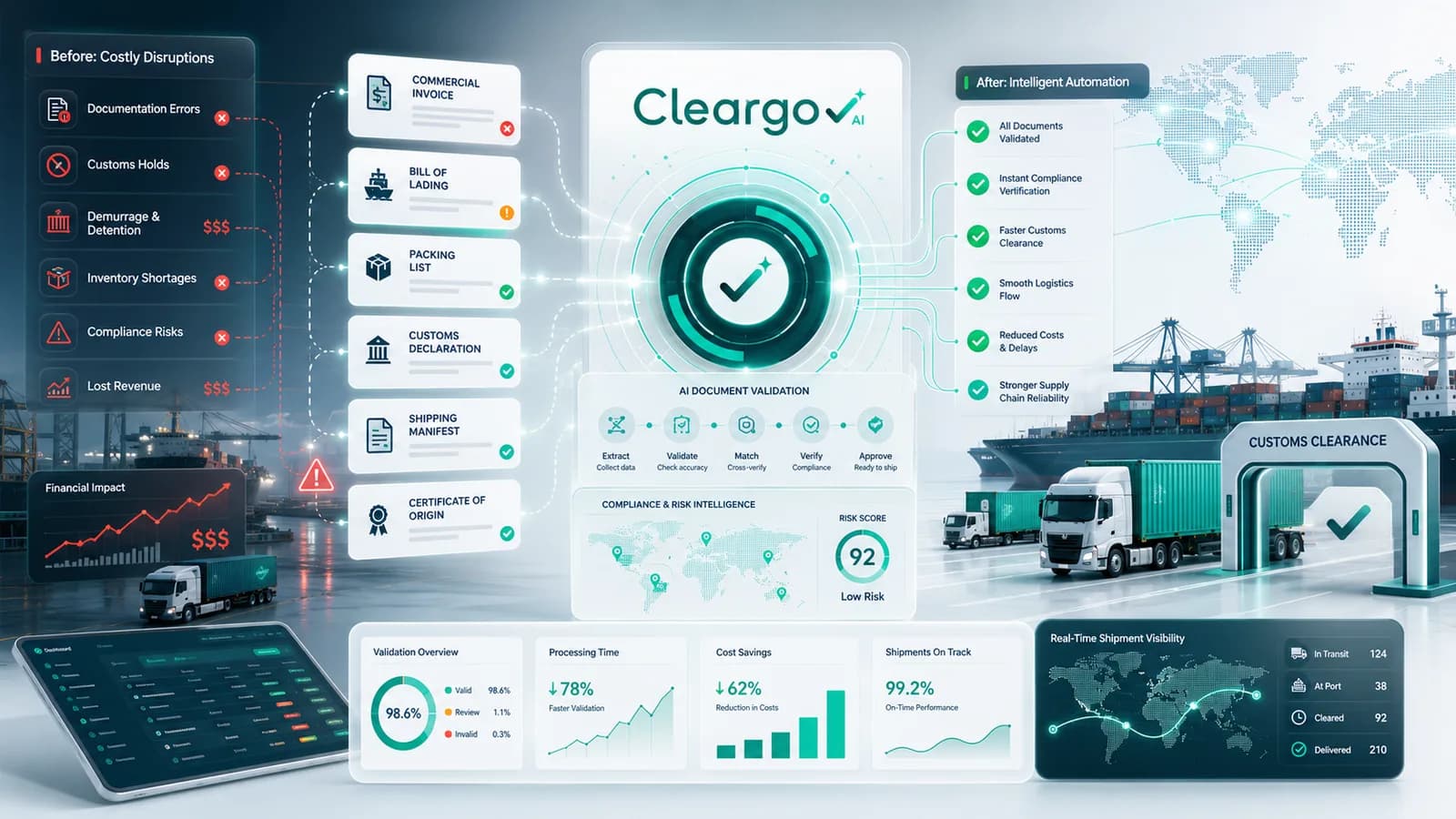
Most importers and exporters understand that customs delays are inconvenient. What many companies fail to realize, however, is just how expensive these delays can become. A shipment that sits at a port for a few extra days because of a documentation issue may appear to be a minor operational problem, but the financial consequences often extend far beyond a delayed delivery date.
In international trade, documentation is the foundation upon which customs clearance is built. Commercial invoices, packing lists, bills of lading, certificates of origin, FDA filings, phytosanitary certificates, and other supporting documents are used by customs authorities to determine whether goods can legally enter a country. When those documents contain errors, inconsistencies, or missing information, shipments can be flagged for review, held for inspection, or rejected entirely.
The Visible and Hidden Costs of Customs Delays
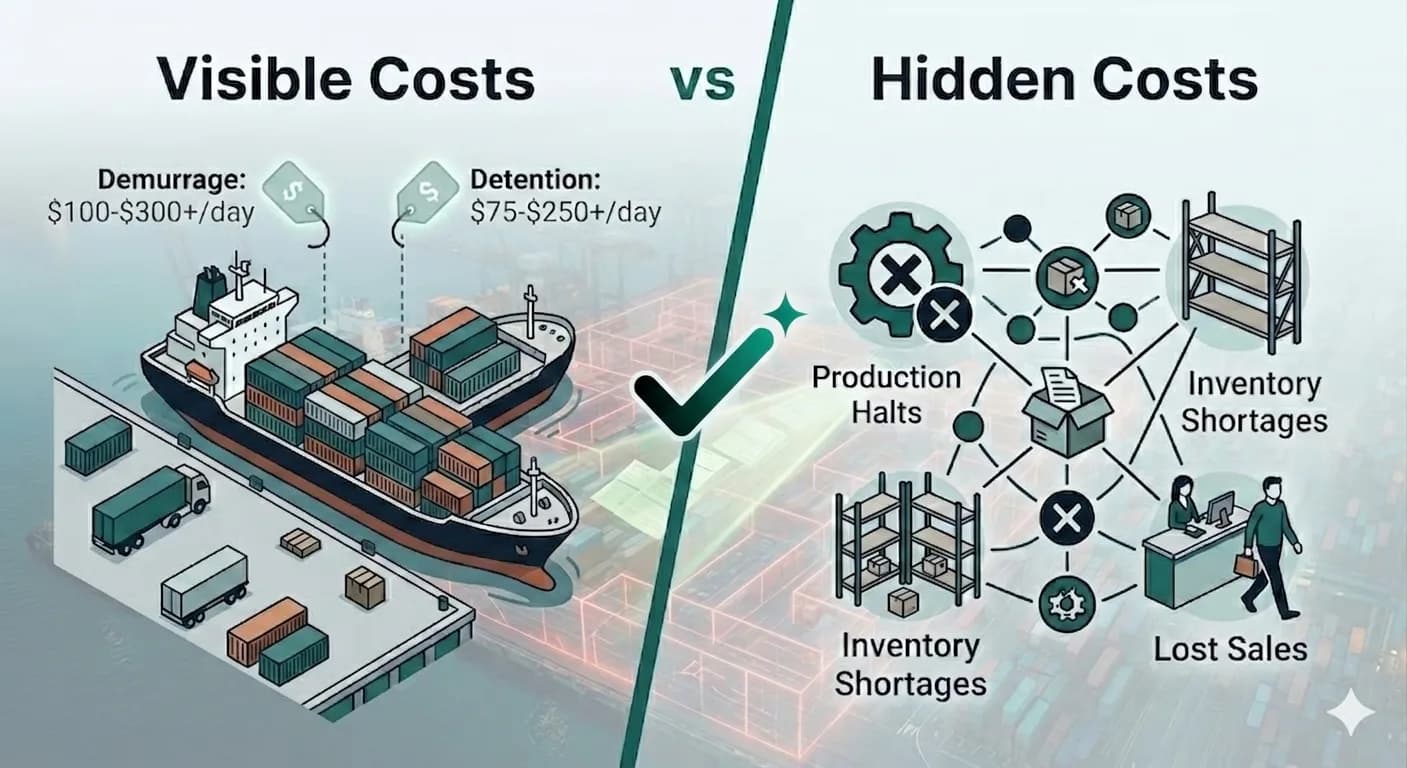
The visible costs of a customs delay are usually the first expenses companies notice. Demurrage fees begin accumulating when containers remain at a port beyond the allotted free time. Detention charges may apply when containers are not returned promptly. Storage fees can increase daily while cargo remains in a terminal or warehouse. Depending on the carrier, terminal, and location, these charges can quickly reach hundreds or even thousands of dollars. Industry sources indicate that demurrage fees commonly range between $100 and $300 per container per day, with higher costs possible during periods of port congestion.
The Financial Impact of Documentation Errors
Demurrage
$100-$300+/day
Detention
$75-$250+/day
Storage Fees
Variable
Customs Exams
Hundreds to thousands
Lost Sales
Potentially significant
Production Delays
Significant operational impact
For high-volume importers, annual losses can reach six figures.
However, the direct costs are often only the beginning. The hidden costs associated with documentation errors can be even more damaging. Delayed shipments can disrupt production schedules, create inventory shortages, and prevent retailers from receiving products in time for promotions or seasonal sales. Manufacturers waiting for critical components may be forced to halt production lines. Distributors may lose customers when products fail to arrive as promised. The resulting impact on revenue, customer satisfaction, and reputation can far exceed the original customs charges.
Consider a company importing food products into the United States. A discrepancy between the commercial invoice and packing list causes customs authorities to request additional clarification. What initially appears to be a simple clerical mistake results in a five-day delay. During that period, the importer incurs demurrage charges, storage fees, and additional broker costs. Retail customers waiting for the shipment begin experiencing stock shortages, forcing them to purchase alternative products from competitors. By the time the issue is resolved, the total financial impact is significantly larger than the direct customs-related expenses.
Compliance Risk and Regulatory Penalties
Documentation errors also increase compliance risk. Regulatory agencies such as U.S. Customs and Border Protection (CBP), the Food and Drug Administration (FDA), and other Partner Government Agencies expect import documentation to be accurate and complete. Repeated errors can attract additional scrutiny, increase the likelihood of inspections, and expose businesses to penalties. In some situations, inaccurate declarations can lead to substantial fines or seizure of goods.
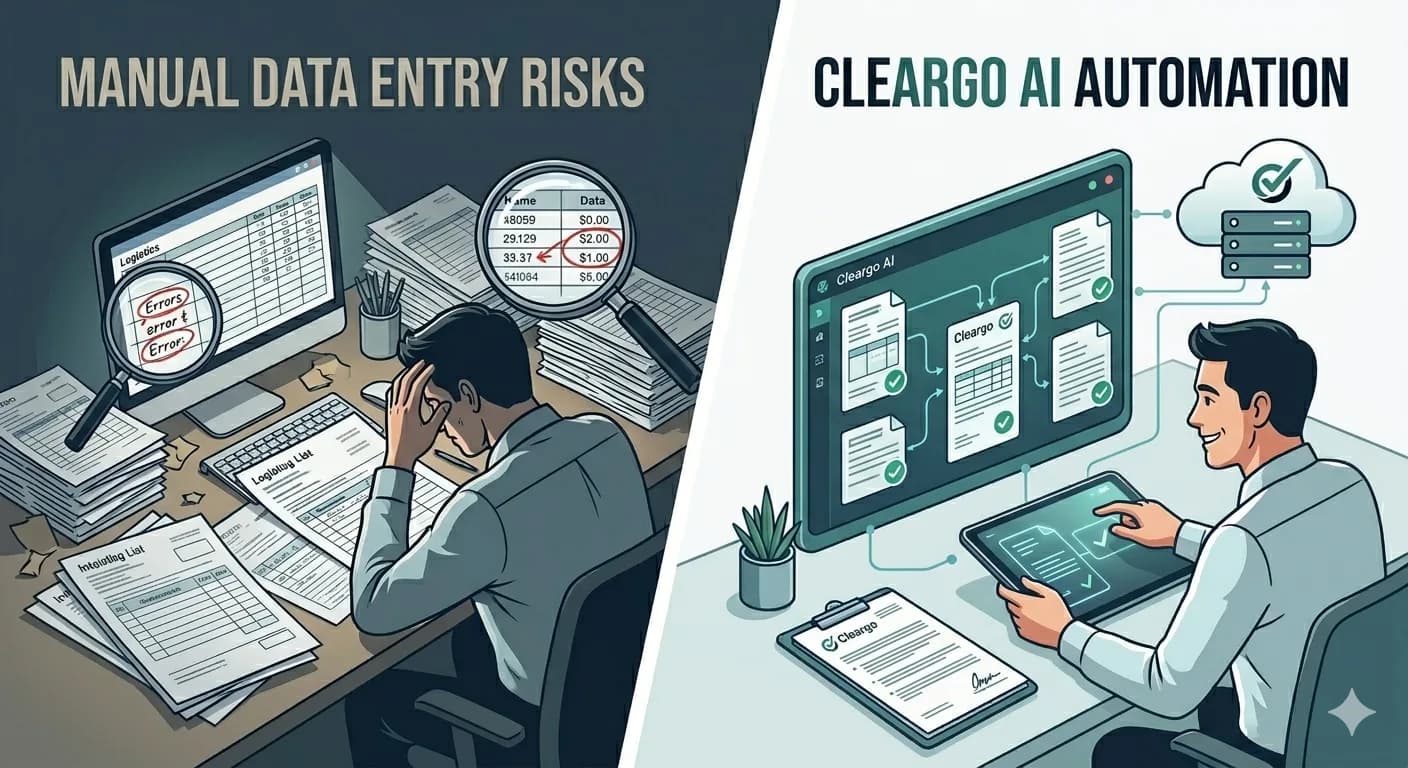
As global supply chains become increasingly complex, the volume of documentation continues to grow. A single shipment may involve multiple suppliers, freight forwarders, customs brokers, government agencies, and logistics providers. Each participant contributes information that must remain consistent across all documents. When information is entered manually into spreadsheets, emails, and PDF forms, the probability of errors rises dramatically.
Research from logistics providers consistently identifies documentation issues as one of the leading causes of customs delays worldwide. Missing data, incorrect classifications, mismatched quantities, inaccurate product descriptions, and incomplete regulatory filings are recurring problems that affect businesses of all sizes. While large enterprises often have dedicated compliance teams, small and medium-sized companies can be particularly vulnerable because they may lack specialized resources.
How Cleargo AI Automation Prevents Documentation Errors
The encouraging news is that most documentation-related costs are avoidable. Organizations that invest in stronger compliance processes and document validation systems can dramatically reduce their exposure to customs delays. Modern artificial intelligence solutions are capable of extracting information from trade documents, comparing data across multiple files, identifying inconsistencies, and detecting missing information before a shipment is submitted to customs authorities.
This shift from reactive problem-solving to proactive validation is becoming increasingly important. Rather than discovering errors after a shipment has been detained, companies can identify and correct issues during the document preparation stage. The result is faster customs clearance, fewer delays, lower operational costs, and improved supply chain reliability.
The question is no longer whether companies can afford to invest in document validation. The real question is whether they can afford not to.
Estimated Cost Impact of Customs Delays
| Delay Duration | Demurrage + Detention | Operational Impact |
|---|---|---|
| 2 Days | $350-$1,100 | Minor disruption |
| 5 Days | $875-$2,750 | Inventory impact |
| 10 Days | $1,750-$5,500 | Lost sales risk |
| 20 Days | $3,500-$11,000 | Major supply chain disruption |
Sources
- •FreightAmigo - Understanding Demurrage Fees in International Shipping (2025)
- •iContainers - Detention and Demurrage Charges Explained
- •U.S. Customs and Border Protection (CBP) - Import and Entry Requirements
- •U.S. Food and Drug Administration (FDA) - Import Process and Refusals
- •World Trade Organization (WTO) - Trade Facilitation Publications