
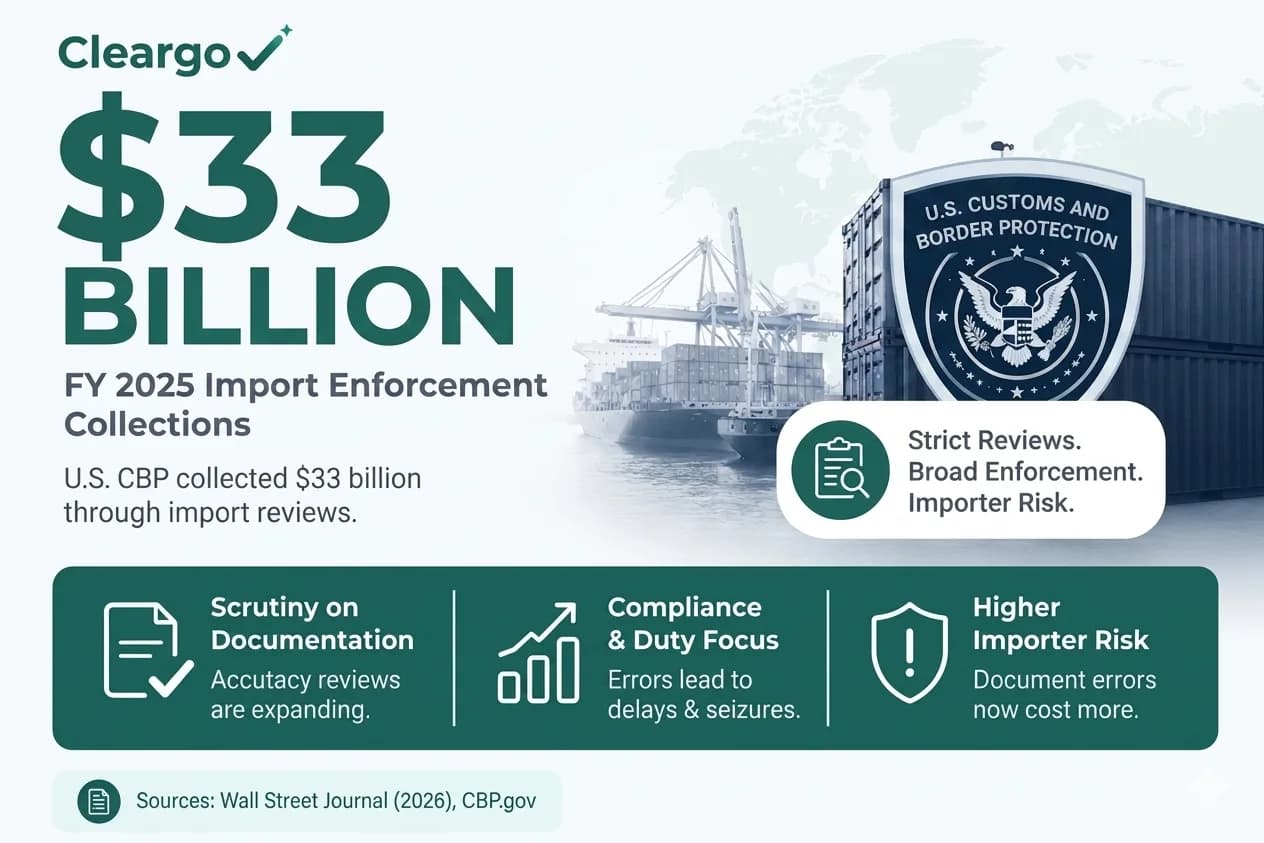
Every day, thousands of shipments arrive at ports, airports, and border crossings around the world carrying everything from food products and consumer goods to industrial equipment and raw materials. Most of these shipments move through customs without incident. Others, however, become stuck in a process that can take days or even weeks to resolve. While many importers assume delays are caused by inspections, regulatory changes, or staffing shortages, the reality is often much simpler. One of the leading causes of customs delays worldwide is documentation errors.
International trade runs on paperwork. Customs authorities rely on commercial invoices, packing lists, bills of lading, certificates of origin, regulatory filings, and numerous supporting documents to determine whether a shipment can be legally admitted into a country. When information is missing, inaccurate, or inconsistent across those documents, customs officials have little choice but to stop and investigate.
For importers and exporters, these delays can be extremely costly. A shipment held at port may accumulate storage charges, demurrage fees, detention costs, and additional inspection expenses. More importantly, delays can disrupt production schedules, create inventory shortages, damage customer relationships, and impact revenue.
Common Documentation Errors That Trigger Customs Holds
One of the most common issues customs officers encounter is inconsistency between a commercial invoice and a packing list. A commercial invoice may indicate that a shipment contains 1,000 cartons while the packing list shows only 950 cartons. Even a relatively small discrepancy raises questions about the true contents of the shipment. Customs authorities must then determine which document is correct before the cargo can be released.
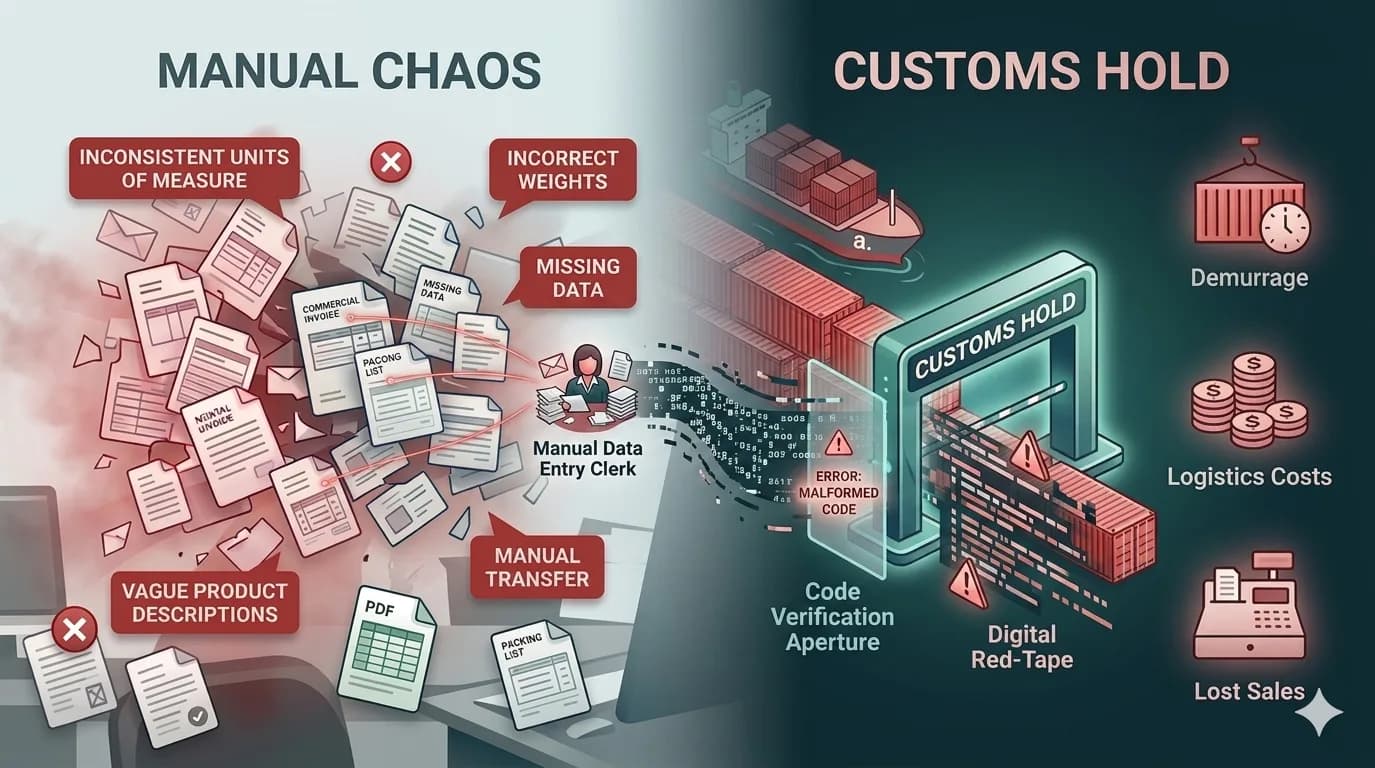
Another frequent problem is the use of vague product descriptions. Descriptions such as “food products,” “accessories,” or “parts” provide insufficient detail for customs classification and risk assessment. Regulatory agencies expect importers to provide clear and specific descriptions that accurately identify the goods being imported. Failure to do so often results in additional requests for information and unnecessary delays.
Classification errors also create significant challenges. Harmonized System (HS) and Harmonized Tariff Schedule (HTS) codes are used by customs authorities to determine duty rates, regulatory requirements, and admissibility. An incorrect classification can result in underpayment of duties, overpayment of duties, customs examinations, or even penalties. Many companies still rely on manual classification processes, increasing the risk of mistakes.
Country of Origin, UFLPA Compliance, and FDA Requirements
Country of origin declarations represent another critical area. Origin information determines eligibility for trade agreements, tariff treatment, and regulatory requirements. In recent years, supply chain transparency has become increasingly important due to regulations such as the Uyghur Forced Labor Prevention Act (UFLPA), which requires importers to demonstrate adequate traceability within their supply chains. Missing or inaccurate origin information can quickly lead to shipment detentions.
Food importers face additional complexity. Products regulated by the U.S. Food and Drug Administration often require Prior Notice submissions, facility registration information, and detailed product data. Missing FDA documentation remains a common cause of delays for food shipments entering the United States. Agricultural products may also require phytosanitary certificates and additional government agency approvals.
Even seemingly minor clerical errors can create substantial problems. Incorrect weights, inconsistent units of measure, expired certificates, wrong consignee details, duplicate invoices, and incorrect container numbers are all examples of issues that can trigger customs reviews. Most of these errors are not the result of negligence. Instead, they occur because information is manually transferred between multiple systems, emails, spreadsheets, and PDF documents.
The financial impact of documentation errors is often underestimated. Industry sources consistently identify documentation problems as one of the most common contributors to customs delays and associated logistics costs. Demurrage and detention fees can range from hundreds to thousands of dollars depending on the duration of the delay and the type of cargo involved. For organizations importing large volumes of goods, the cumulative annual cost can be substantial.
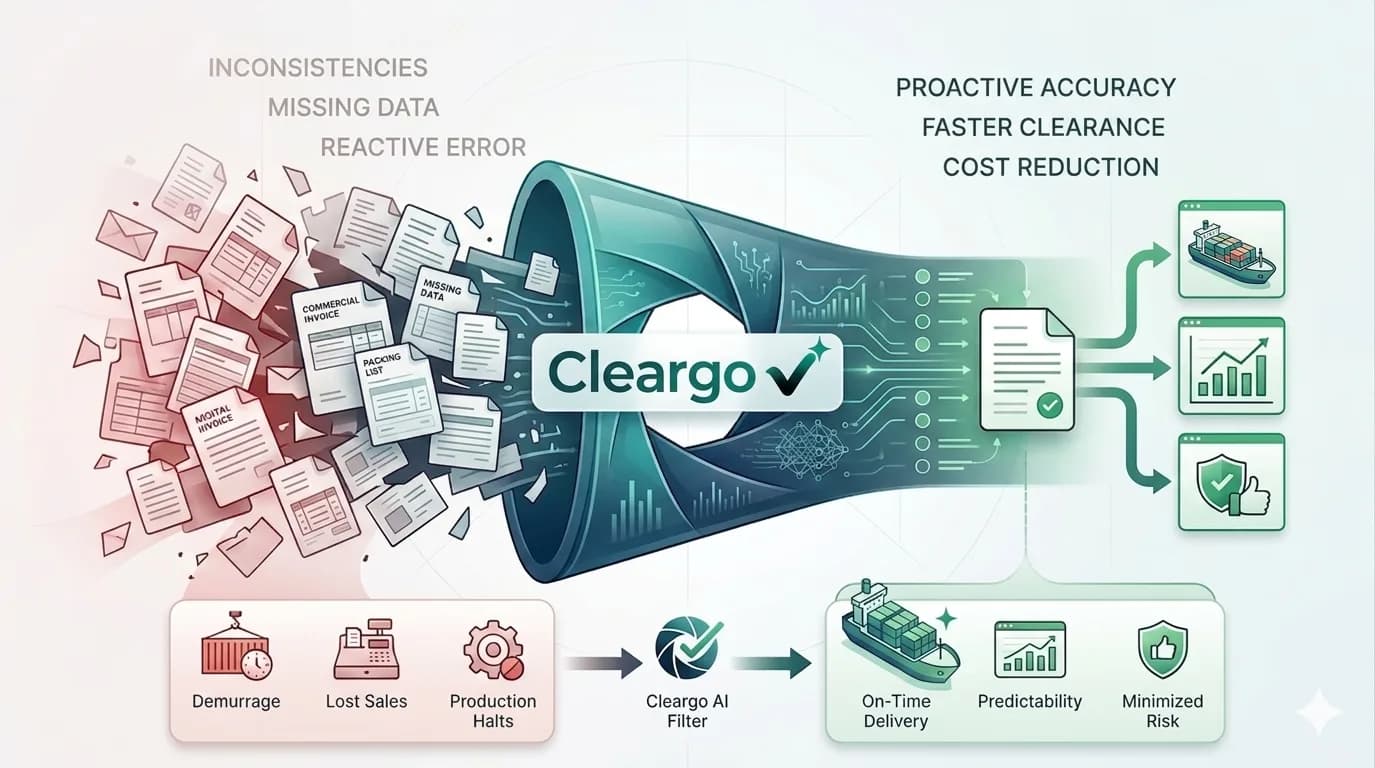
Preventing Delays with Automated Document Validation
The good news is that most documentation-related delays are preventable. Companies that implement standardized document preparation processes, maintain strong compliance procedures, and utilize automated validation technologies significantly reduce their exposure to customs risks. Modern artificial intelligence systems can extract information from trade documents, compare data across multiple files, identify inconsistencies, detect missing information, and flag potential compliance issues before shipments are submitted to customs authorities.
This shift toward automation is becoming increasingly important as global trade regulations continue to evolve. Customs agencies expect higher levels of accuracy, transparency, and traceability than ever before. Businesses that continue relying exclusively on manual document reviews will find it increasingly difficult to maintain efficiency while managing compliance risk.
As international trade becomes more complex, documentation quality is no longer simply an administrative task. It has become a strategic advantage. Companies that invest in accurate, automated, and compliant trade documentation processes will be better positioned to reduce costs, improve supply chain performance, and maintain a competitive edge in the global marketplace.
Trade document mistakes shouldn't cost your company money.
Start a free trial and see how Cleargo AI can identify hidden document errors in minutes.
Start Free TrialSources
- •U.S. Customs and Border Protection (CBP) - Import Documentation and Entry Requirements
- •U.S. Food and Drug Administration (FDA) - Prior Notice and Food Import Requirements
- •Uyghur Forced Labor Prevention Act (UFLPA) Guidance for Importers
- •WT&A Group - Common Causes of Customs Delays
- •Express Freight Management - Documentation Errors and Customs Clearance Delays
- •FreightAmigo - Demurrage and Detention Cost Analysis